
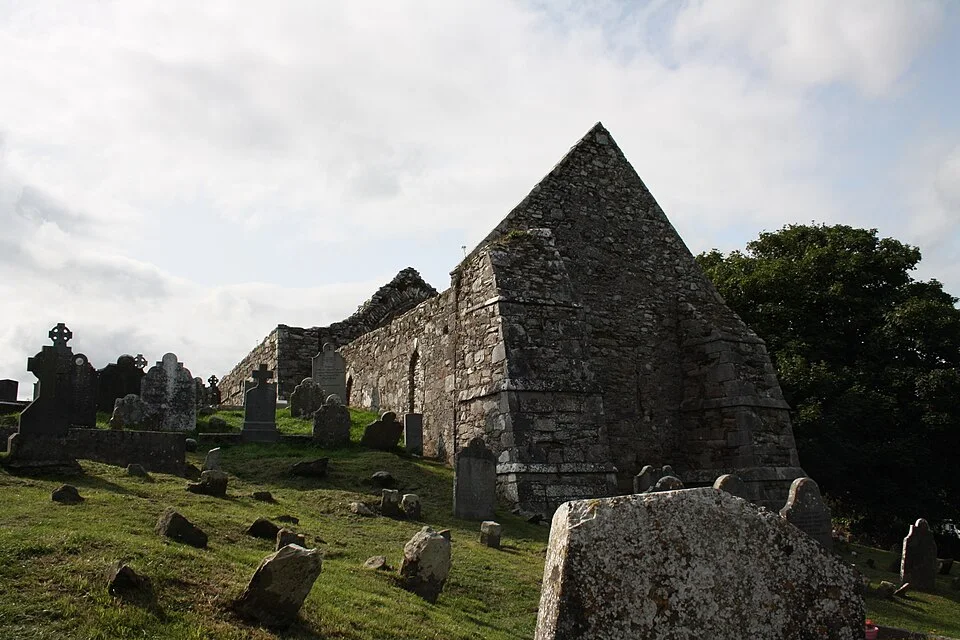
Photo: Cliodhnaoleary · CC BY-SA 4.0. Resized and converted for the web. Full credit.

The cathedral ruins, round tower and oratory above Ardmore connect the village with a long religious history. The surviving monuments belong to different periods, and the site deserves a slower look than a quick photograph of the tower.
Separate the early foundation from later buildings
The association with St Declan reaches back to early Christianity, while the cathedral and round tower are medieval structures. That difference helps make sense of what you see. A place can hold a much older tradition than the stonework that survives today.
Notice the carved details
The cathedral’s Romanesque arcading includes biblical scenes, while ogham stones and grave slabs form other parts of the site’s interest. Look carefully from the permitted areas and leave all surfaces untouched. Do not rub, trace or climb carved stone to get a closer view.
Treat the tower as a monument, not a promised climb
Its height gives the site a strong presence above the village, but seeing a tower does not establish public interior access. Keep the visit within the signed boundaries and respect the graveyard. A view of the building from safe ground is a worthwhile part of the outing.
Before you go
Heritage Ireland currently notes conservation works and identifies the site as unguided. Follow barriers and any restricted access rather than assuming an older photograph reflects today’s route. Wear suitable footwear, supervise children and ask for current information if a particular part of the monument is the reason for your journey.
Plan your visit
St Declan’s Monastery at Ardmore
More in Waterford
Waterford Greenway: choose the section that makes your day · Explore the county guide
Have a story to share?
Tell us about a place, a journey or a different side of Ireland. Send your article to the Ramble editorial team for review.