
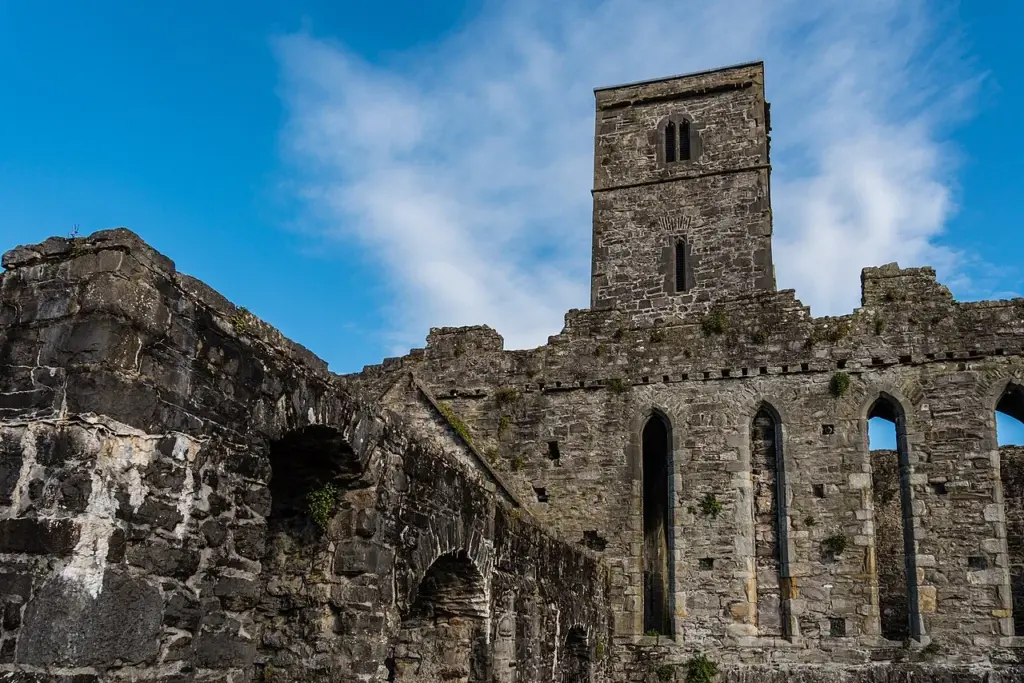
Photo: Oliver Gargan · CC BY-SA 4.0. Resized and converted for the web. Full credit.

The building commonly called Sligo Abbey began as a Dominican priory. Its remains sit in the town, making it a practical cultural stop without a separate cross-country journey. The cloister, surviving church fabric and carved details provide several ways into the place, even if medieval religious buildings are not usually the focus of your holidays.
Look for the spaces of a community
The church was only one part of life here. As you move around, look for the relationship between worship, communal rooms and the cloister. The layout helps explain a religious community as people living and working together, rather than a single picturesque ruin. Site interpretation or a guided visit can make unfamiliar parts easier to recognise.
Give the carving some attention
Heritage Ireland highlights the surviving cloister arcade, monumental sculpture and a carved fifteenth-century high altar. Instead of trying to record every corner, choose a detail and spend a little time with it. Look at the material, the figures or ornament, and how the carving fits into the larger building. A close look can be more memorable than another wide photograph of the whole site.
Remember the later history too
The grounds also served as a burial place after the religious community had gone. That later use belongs in the story rather than being an incidental layer around the architecture. Be considerate when moving through the graveyard and keep photographs respectful. The visit can sit comfortably beside lunch or another town attraction, provided you allow for the actual admission and last-entry times.
Before you go
Consult Heritage Ireland for current opening and admission. The official information notes uneven walkways and limited access, and provides a social guide to help visitors prepare. Do not assume that every part of an open-air ruin is step-free.
Plan your visit
Visitor information from the attraction, operator or tourism authority
More in Sligo
The Model: make room for art in a Sligo break · Explore the county guide
Have a story to share?
Tell us about a place, a journey or a different side of Ireland. Send your article to the Ramble editorial team for review.