
Photo: Wanfried-Dublin · CC BY-SA 4.0. Resized and converted for the web. Full credit.

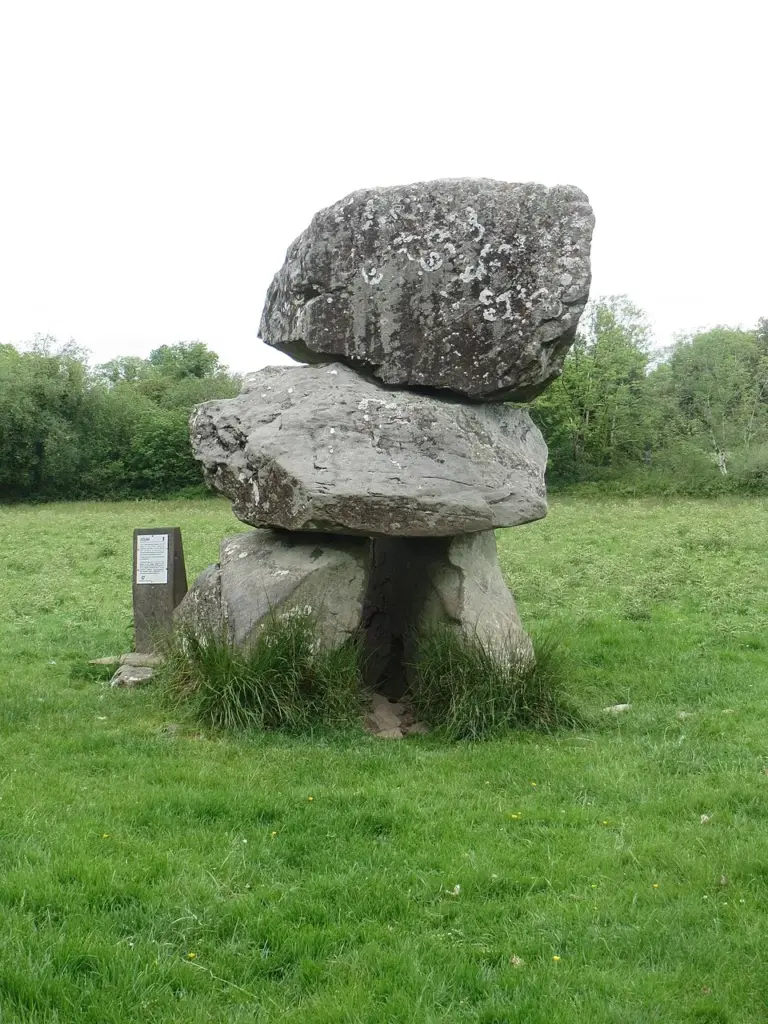
The portal tomb at Aughnacliffe rewards looking from more than one angle. Two capstones distinguish it from the simpler silhouette many people associate with a dolmen. It stands on private farmland, reached by an informal path from the village. That setting is part of the visit: this is a monument within a working landscape, not a fenced museum courtyard.
Read the structure
Look for the relationship between the large upper stones and their supports. The small surviving chamber can be difficult to reconcile with the scale above it. Keep outside the structure and resist the temptation to climb up for a closer photograph; the engineering is visible from ground level.
Leave room for uncertainty
Portal tombs belong to prehistoric burial traditions. Their present appearance does not tell us every detail of their original use or surrounding construction. Notice what survives without filling the gaps with a confident account of ceremonies that the stones themselves cannot establish.
Separate story from archaeology
Local tradition links this tomb and nearby Cleenrath with Diarmuid and Gráinne. It is a story attached to the landscape, not a literal explanation of the monument’s prehistoric builders. Both folklore and archaeology can enrich a visit when they are identified for what they are.
Before you go
Check the current approach locally before entering the field. Be alert for livestock, close gates as directed and avoid bringing a dog into a situation where it may disturb animals. The informal path may be wet or uneven. Nearby Cleenrath has restricted private access and no parking provision, so it should not be treated as an automatic second stop. Allow time for Aughnacliffe village and Leebeen Park instead of turning a quiet monument visit into a search across neighbouring farmland.
Plan your visit
Visit Longford: Aughnacliffe Portal Tomb
More in Longford
Cleenrath: a portal tomb with restricted access · Explore the county guide
Have a story to share?
Tell us about a place, a journey or a different side of Ireland. Send your article to the Ramble editorial team for review.