
Photo: Andreas F. Borchert · CC BY-SA 4.0. Resized and converted for the web. Full credit.

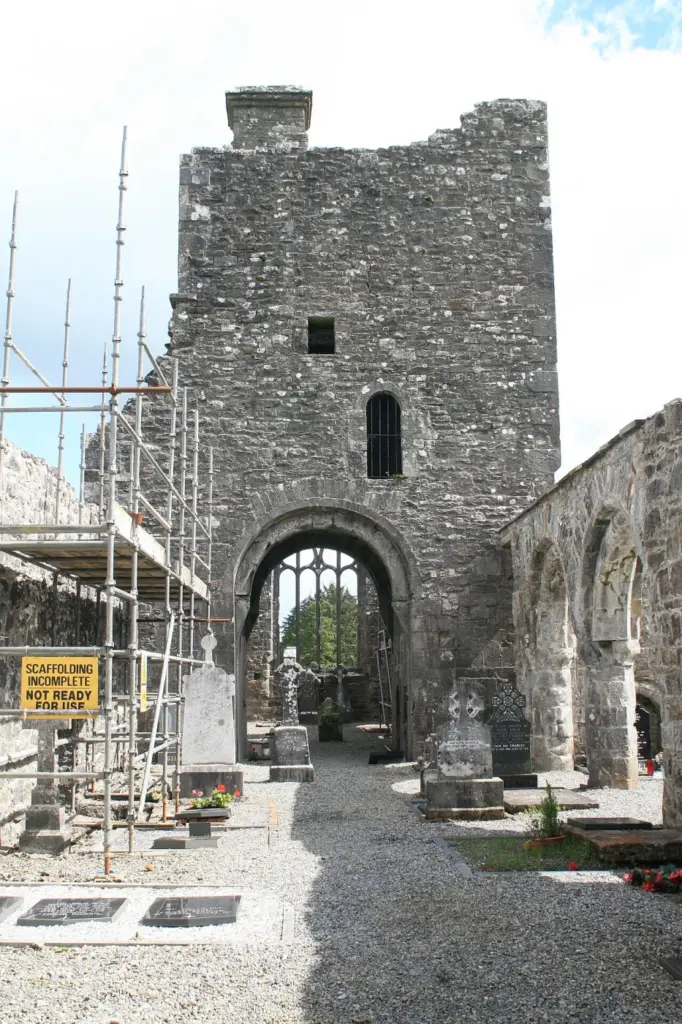
Creevelea is commonly called an abbey, but it was founded as a Franciscan friary in the early sixteenth century. Near Dromahair and the River Bonet, its remains offer more than a picturesque stone shell. The surviving spaces and carved details help bring a religious community into focus, provided you slow down enough to look beyond the first wide view.
Read the shape of the buildings
Look for the relationship between the church, cloister and other surviving spaces. A friary was a place of communal life as well as worship. Its layout can make more sense when you think about people moving between daily tasks instead of seeing each wall as an isolated ruin. Use site interpretation to help identify features rather than guessing a function from their appearance.
Give the carving time
Discover Ireland highlights stonework including an image of Saint Francis preaching to birds. Look carefully and leave the carving untouched. Small details often carry more of a visit’s memory than another photograph of the whole building. Respect graves and later uses of the site as well; the history did not end neatly when the religious community’s circumstances changed.
Keep the riverside outing realistic
A visit can fit naturally with time in Dromahair. Longer routes connected with the Sligo Way are a separate walking decision, not an automatic continuation of a short heritage stop. Choose your return before leaving the village and allow for ground conditions. You can enjoy the friary and a meal without turning the afternoon into an unplanned cross-country hike.
Before you go
Check current Creevelea access and local walking information. Wear suitable shoes around uneven masonry and keep children close. Follow public paths, respect cemetery activity and leave all stones and archaeological material where they are.
Plan your visit
Current attraction, operator or tourism information
More in Leitrim
Cavan and Leitrim Railway: a transport visit in Dromod · Explore the county guide
Have a story to share?
Tell us about a place, a journey or a different side of Ireland. Send your article to the Ramble editorial team for review.