
Photo: Jan-Philipp Litza · CC BY-SA 4.0. Resized and converted for the web. Full credit.

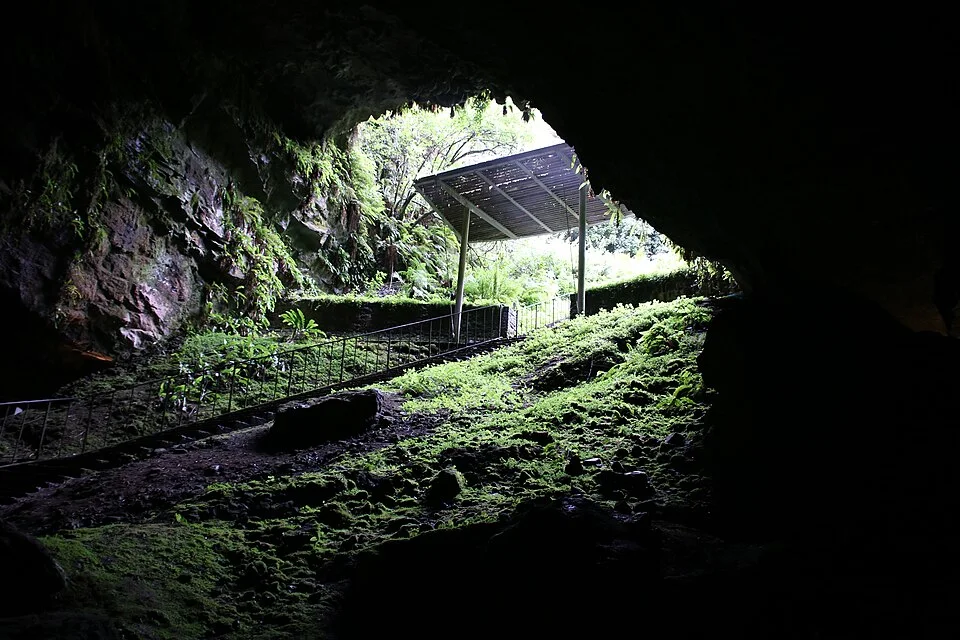
Dunmore Cave, north of Kilkenny city, is a guided underground visit rather than an easy indoor alternative to a wet walk. Limestone formations and archaeological discoveries make it distinctive, but the physical route deserves as much attention as the attraction’s history.
Know what the descent involves
The operator describes approximately seven hundred steps across the visit, with cold conditions and potentially wet, uneven surfaces. The cave is not wheelchair accessible. Anyone concerned about stairs, enclosed spaces or mobility should discuss the full route before buying a ticket, not after beginning the descent.
Look at the limestone formations
Stalagmites and other deposits give the guided visit its visual interest. Listen to the guide’s explanation and leave the formations untouched. Their shapes and growth cannot be judged simply by size, and a torch or photograph is no substitute for the conservation instructions given on site.
Keep history and certainty separate
Medieval annals describe a violent event at Dunmore, while archaeological finds establish significant past activity. Heritage Ireland notes that the massacre account has not been reliably confirmed by archaeology. It is more interesting to consider the different kinds of evidence than to repeat a dramatic story as an established reconstruction.
Before you go
Entry is by guided tour, with limited numbers; contact the site in advance for availability and current last admission. Very young children may find the route unsuitable, and the operator specifies no more than three children per adult. Wear footwear suitable for steps and damp ground, carry an extra layer and follow the guide. This is Dunmore Cave near Ballyfoyle in Kilkenny, not a similarly named place elsewhere.
Plan your visit
Heritage Ireland: Dunmore Cave
More in Kilkenny
Kilkenny Famine Experience: hear the workhouse stories at MacDonagh Junction · Explore the county guide
Have a story to share?
Tell us about a place, a journey or a different side of Ireland. Send your article to the Ramble editorial team for review.