
Photo: Avramescu Marius · CC BY-SA 4.0. Resized and converted for the web. Full credit.

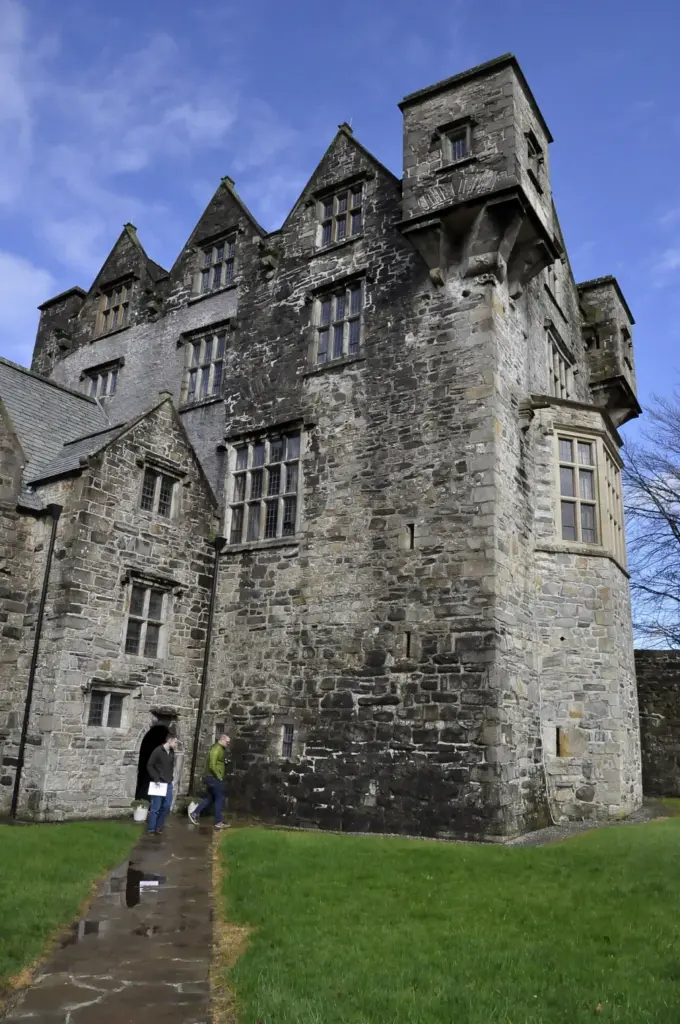
Donegal Castle stands beside the River Eske in the heart of Donegal Town. It is a useful first history stop because the building itself shows a change in ownership and ambition: a Gaelic tower house became part of a later residence, rather than remaining one unaltered medieval fortress.
Look for the different periods
Heritage Ireland traces the castle to the fifteenth-century O’Donnells and records Sir Basil Brooke becoming its owner in 1616. Brooke added a manor house beside the tower. Keep those stages in mind as you visit; looking for the joins between them gives you more to work with than simply deciding whether the rooms appear medieval.
Spend time with the detail
The carved chimney-piece is one of the details worth seeking out. Its decoration and the Brooke arms turn a large architectural feature into a statement about the people living there. Information panels explain the castle’s changing fortunes, including its restoration in the 1990s. Read those alongside the fabric of the building rather than assuming everything visible has survived untouched since the earliest construction.
Keep the rest of the day close
A town-centre castle pairs easily with a meal or a walk around the central streets. That makes it a useful choice on an arrival day or when poor weather changes an outdoor plan. If a member of the group needs easier access, use the published social guide and ask the site directly about the parts of the building they can visit comfortably.
Before you go
Check Heritage Ireland for current admission, last entry and closures before travelling. The site lists limited access; do not assume step-free access throughout. This is a guide to planning a visit, not a report of a recent guided tour.
Plan your visit
OPW: Donegal Castle · Official visitor information
More in Donegal
Grianán of Aileach: a stone fort above the two loughs · Explore the county guide
Have a story to share?
Tell us about a place, a journey or a different side of Ireland. Send your article to the Ramble editorial team for review.