
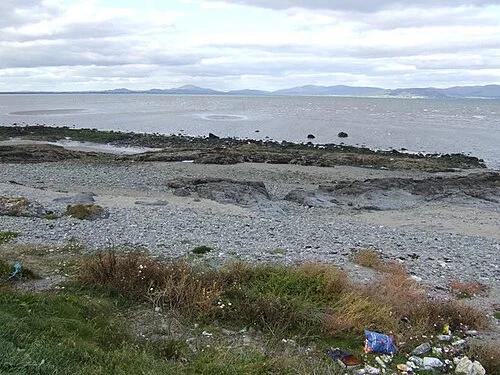
Bay habitat context, not a guaranteed bird sighting or safe mudflat route. Photo: Jonathan Billinger · CC BY-SA 2.0. Resized and converted for the web. Full credit.

Dundalk Bay’s open water, saltmarsh and broad tidal flats support a birdwatching outing that changes with season and tide. Wintering waterbirds are a particular reason to look closely. Choose a safe public viewpoint and bring binoculars rather than expecting to walk out among the flocks or find every species on a single visit.
Watch how the tide changes feeding
An exposed mudflat can become a busy feeding area, while rising water moves birds towards resting places. Spend time observing those changes from land. The tide table helps plan the visit, but it does not make unfamiliar flats safe to cross.
Learn a few birds at a time
Oystercatchers, curlews and dunlin are among the species identified in the protected-site information. Start with shape, movement and feeding behaviour rather than trying to identify everything immediately. Numbers and species vary, and an old survey total is not a promise of what will be present today.
Keep resting flocks settled
Repeated disturbance costs birds feeding and resting time. Stay well back, keep dogs controlled and avoid approaching simply to make the flock fly for a photograph. A telescope or binoculars are more useful than a closer position obtained at the birds’ expense.
Before you go
Use a current map to choose public access such as an established bay-side walk or promenade, and check local signs. Do not enter saltmarsh, private land or mudflats to improve the view. Dress for wind and a period of standing still, carrying a drink and enough daylight for the return. A guided outing, if available, can help a beginner learn without disturbing wildlife; confirm the actual event and meeting point. Dundalk or Blackrock can provide a separate food stop. The bay is not a zoo with guaranteed sightings: its appeal lies in watching a working tidal habitat and accepting what the conditions and season reveal.
Plan your visit
NPWS: Dundalk Bay Special Protection Area · NPWS: bay habitats and waterbird species · Visit Louth: Dundalk Bay visitor setting
More in Louth
The Boyne Greenway: walk from Drogheda with a clear return plan · Explore the county guide
Have a story to share?
Tell us about a place, a journey or a different side of Ireland. Send your article to the Ramble editorial team for review.