
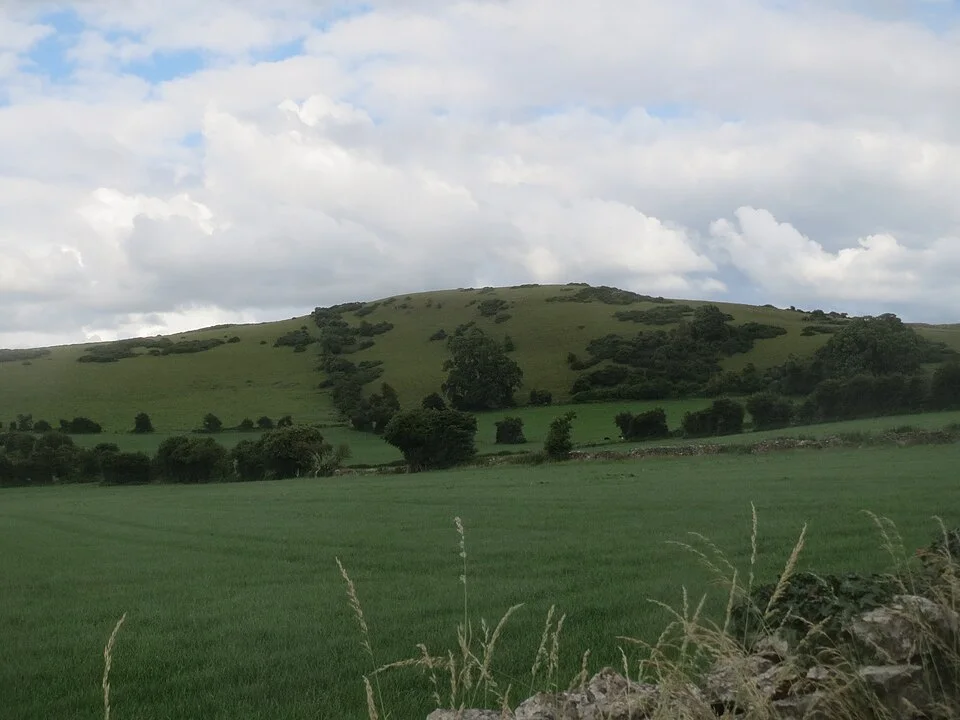
Photo: Wanfried-Dublin · CC BY-SA 4.0. Resized and converted for the web. Full credit.

Croghan Hill rises distinctly above the surrounding midlands, making its outlook feel larger than the climb might suggest. Its volcanic geological history and cultural associations add interest to a short hill visit. Choose the established approach and give conditions as much attention as the relatively modest summit height.
Use the intended route
Start from the recognised village approach and follow current local directions and signage. Old accounts of scrambling across fences do not describe acceptable visitor access. The surrounding land remains working countryside, so keep gates as directed and do not create a new route through crops or livestock.
Read the hill in the flatter landscape
The wider Bog of Allen setting helps explain why this isolated rise is so noticeable. Geological Survey Ireland identifies its volcanic significance. Look at the contrast between the hill and the ground around it rather than expecting a dramatic mountain range or an intact volcanic crater.
Keep the summit’s history intact
The top has cultural and archaeological importance as well as views. Stay clear of memorials and protected features, leave stone in place and avoid making new cairns. A distant museum object connected with the area should not lead to searching or digging in the landscape where it was found.
Before you go
Check current permitted access and the forecast before leaving. Wear footwear for grass, mud and sloping ground, with a layer for wind at the top. Poor visibility can remove the main reason for the climb, so keep a lower-level alternative. Follow current rules concerning animals and do not assume a dog is permitted on farmland. Leave enough daylight for the descent and avoid confusing this Offaly hill with Croghan Mountain on the Wicklow–Wexford border.
Plan your visit
Visit Offaly: Croghan Hill · Geological Survey Ireland: Offaly geological heritage audit
More in Offaly
Derryounce: settle the loop before following the lakeside path · Explore the county guide
Have a story to share?
Tell us about a place, a journey or a different side of Ireland. Send your article to the Ramble editorial team for review.