
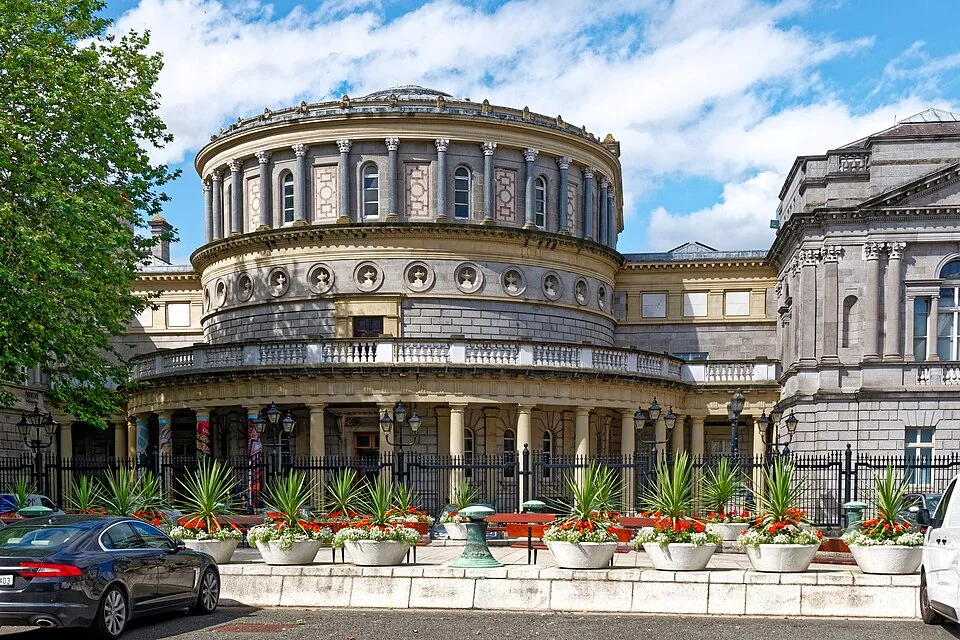
Archaeology museum exterior on Kildare Street, not the separate Natural History building on Merrion Street. Photo: Holger Uwe Schmitt · CC BY-SA 4.0. Resized and converted for the web. Full credit.

Gold, metalwork and traces of earlier lives give the National Museum’s Kildare Street collection its particular pull. The objects are often small enough to reward close looking rather than a fast sweep around a large room. This is a Dublin visit for considering how things were made, used, valued and eventually discovered, not simply how old they are.
Begin with one material or period
Choose a collection such as Ireland’s prehistoric gold, the Treasury or Viking Ireland. Following one thread makes the museum easier to absorb than moving through every period without a pause. Look at workmanship and scale before reading the interpretation; a tiny detail can change how an object feels.
Read the circumstances of discovery
An object’s story includes where it was found and how it has been interpreted. Museum labels can distinguish evidence from an attractive theory. Keep that distinction when talking about the exhibits afterwards: a striking design does not by itself reveal exactly what its maker believed.
Treat difficult material thoughtfully
Some archaeological displays concern death and the treatment of human remains. Read the current exhibition information when deciding what suits younger children or anyone who might find that material upsetting. There is no obligation to see every room in order to have made a worthwhile visit.
Before you go
Admission is free, but check opening hours, special events and group arrangements on the museum’s own pages. The ground-floor galleries are accessible, but there is no lift to the first floor. Discuss the areas you want to see with staff before visiting. This is the Kildare Street archaeology museum in Dublin, not the Natural History building on Merrion Street or the decorative-arts collections at Collins Barracks. Keep those addresses distinct when arranging transport or another museum visit.
Plan your visit
National Museum: Kildare Street collections · National Museum: visitor information · National Museum: archaeology access
More in Dublin
Collins Barracks: find Irish design and history beyond the parade ground · Explore the county guide
Have a story to share?
Tell us about a place, a journey or a different side of Ireland. Send your article to the Ramble editorial team for review.