
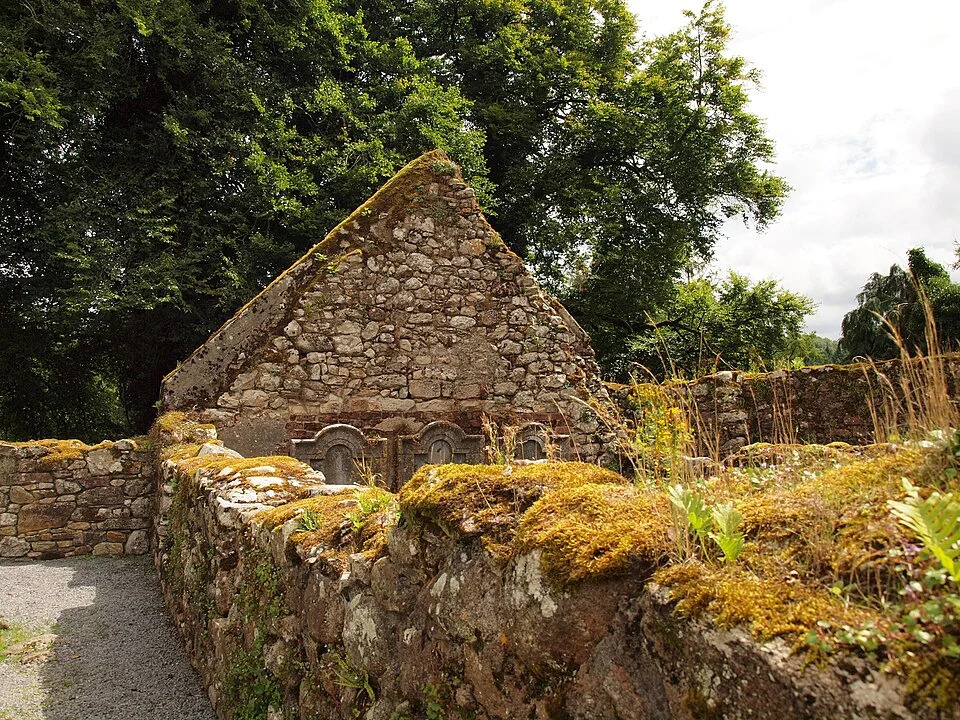
Photo: Smirkybec · CC BY-SA 4.0. Resized and converted for the web. Full credit.

St Mullins brings together a monastic landscape, a burial ground and a long association with pilgrimage beside the Barrow valley. It is a place to visit quietly, with attention to the people who still use it. The surviving ruins are only one part of that continuing life.
Find the early foundation in the later remains
The monastery is associated with St Moling in the seventh century. Later churches and the remains of a round tower mark subsequent generations of religious use. Do not assume every wall belongs to the original foundation or that the present layout preserves one complete period.
Look closely at the carved stone
The surviving cross fragments and other details reward slow looking. Use the interpretation or a reliable site plan rather than guessing from a worn shape. Do not rub, chalk, trace or move stones to make a photograph clearer.
Respect the graveyard and well
The burial ground and holy well remain meaningful to local people. Keep away from active ceremonies and give visitors privacy. Traditions associated with healing belong to the site’s religious history; they should not be turned into medical promises or instructions to drink untreated water.
Before you go
Use the current public entrance and keep to permitted routes. Uneven ground, low walls and steps may affect access, so ask locally about the route that suits your group. The river is a separate part of a day out and needs its own supervision and weather judgement. Allow time to pause without blocking gates, graves or the movement of other visitors.
Plan your visit
Carlow Tourism: St Mullins ecclesiastical village · Waterways Ireland: St Mullins
More in Carlow
Leighlinbridge Castle: see the tower in the story of the crossing · Explore the county guide
Have a story to share?
Tell us about a place, a journey or a different side of Ireland. Send your article to the Ramble editorial team for review.