
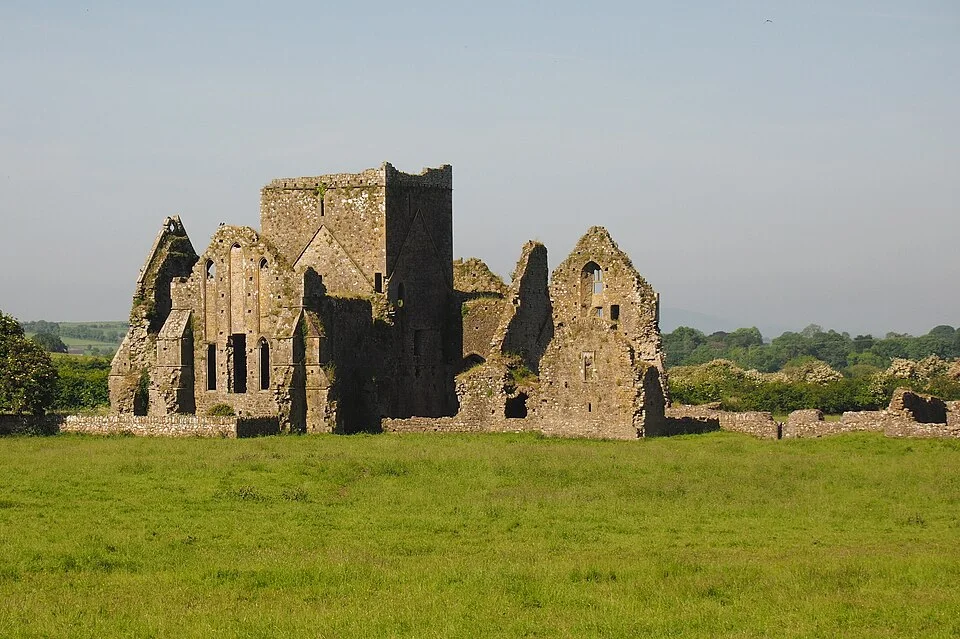
Photo: Hajotthu · CC BY-SA 3.0. Resized and converted for the web. Full credit.

Hore Abbey’s ruined church stands below the Rock of Cashel, offering another way to understand the area’s religious landscape. The relationship between the two sites is visually striking, but the abbey deserves attention as more than a foreground for a photograph of the Rock.
Follow the shape of the church
The cruciform church, tower and cloister remains provide clues to the arrangement of monastic life. Look at the surviving spaces from ground level and use the official history to identify them. A ruin does not need a complete roof to make its plan worth considering.
Keep the monastic phases clear
The site had a Benedictine phase before becoming Cistercian in the thirteenth century. That change belongs to its own story, distinct from the royal history of the hill above. Avoid turning every association with a bishop or a religious order into a confidently dated detail without interpretation to support it.
Treat the approach as part of the visit
Heritage Ireland warns that livestock may be present in the surrounding field. Use the permitted entrance, leave gates as directed and give animals room. A short walk across grass still requires sensible footwear and attention to the current conditions underfoot.
Before you go
This is an unguided national monument, with no assumption of staffed facilities or a supervised route through every space. Check notices, stay off walls and keep children close around uneven remains. Respect farmland and do not bring dogs into a field of livestock without explicit permission. Visits to the Rock of Cashel require separate admission and planning.
Plan your visit
Heritage Ireland: Hore Cistercian Abbey · Discover Ireland: Hore Abbey
More in Tipperary
Holycross Abbey: visit a restored church with a living purpose · Explore the county guide
Have a story to share?
Tell us about a place, a journey or a different side of Ireland. Send your article to the Ramble editorial team for review.